Water heater trouble shows up in a handful of ways. There is no hot water at all. There is some, but it runs out halfway through the first shower. The water comes out rusty or smells like metal or rotten eggs. The tank pops and rumbles as it heats, or the relief valve drips into its pipe. In Fort Collins it often shows up first in winter, when January lows at the Colorado State University weather station average 18.3°F (CSU January normals) and the heater is working its hardest.
Fort Collins Water Heater Help is an independent referral service, not a plumbing or water heater company. Call or send a request, and we connect you with an independent water heater or plumbing contractor who serves Fort Collins. The contractor diagnoses the heater and gives you a price before doing any work. The referral is free, the contractor sets its own prices, schedule and warranty, and callbacks and on-site availability vary.
Gas Water Heaters: Pilot, Igniter, Thermocouple and Gas Valve
A gas tank heater has a burner under the tank, a pilot or electronic igniter that lights it, a safety sensor (a thermocouple or flame sensor) that proves the flame is there, and a gas control valve that ties it all together. When any of these fails, the burner won't run.
- Pilot won't stay lit: often a worn thermocouple, a dirty pilot or a draft problem. HomeAdvisor puts a thermocouple at about $150 and pilot or ignition service at $50 to $150, as national figures (HomeAdvisor, water heater repair).
- Burner won't light or cycles off: the igniter, flame sensor or gas control valve. HomeAdvisor lists a gas control valve at about $350.
- Yellow, lazy flame or soot: a combustion or venting problem. Stop using the heater and have it checked, since poor combustion is how carbon monoxide gets made.
If you smell gas at any point, don't relight anything. Leave the home and call the gas utility or 911 from outside.
Electric Water Heaters: Elements and Thermostats
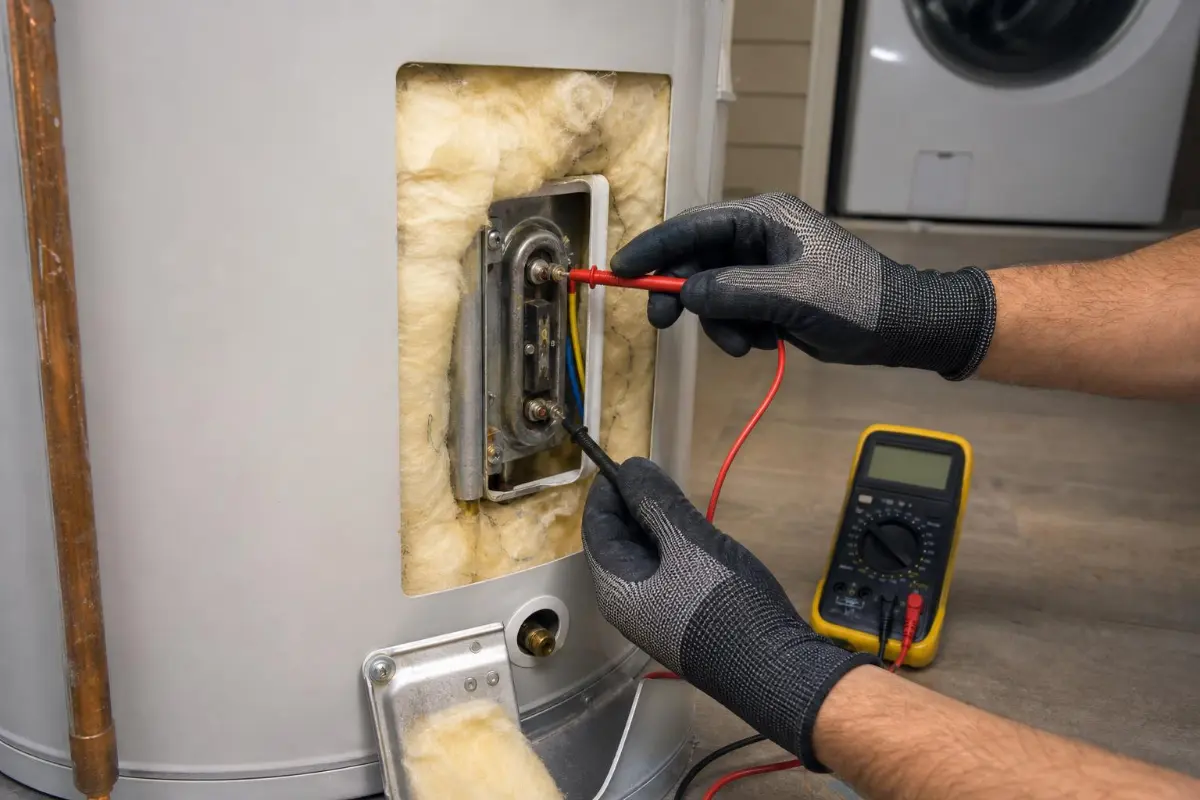
Most electric tanks have an upper and a lower heating element, each with its own thermostat. HomeAdvisor notes that when the top element fails you can get no hot water at all, and that tripped breakers are a common sign of an electric fault. A failed lower element tends to give you a short burst of hot water that runs out fast.
- Heating element: $200 to $300 installed (HomeAdvisor, national).
- Thermostat: $150 to $200 installed (HomeAdvisor, national).
Element and thermostat work means opening panels on a 240-volt appliance. The power has to be off at the breaker and tested before anyone touches it.
Noises, Smells and Rusty Water
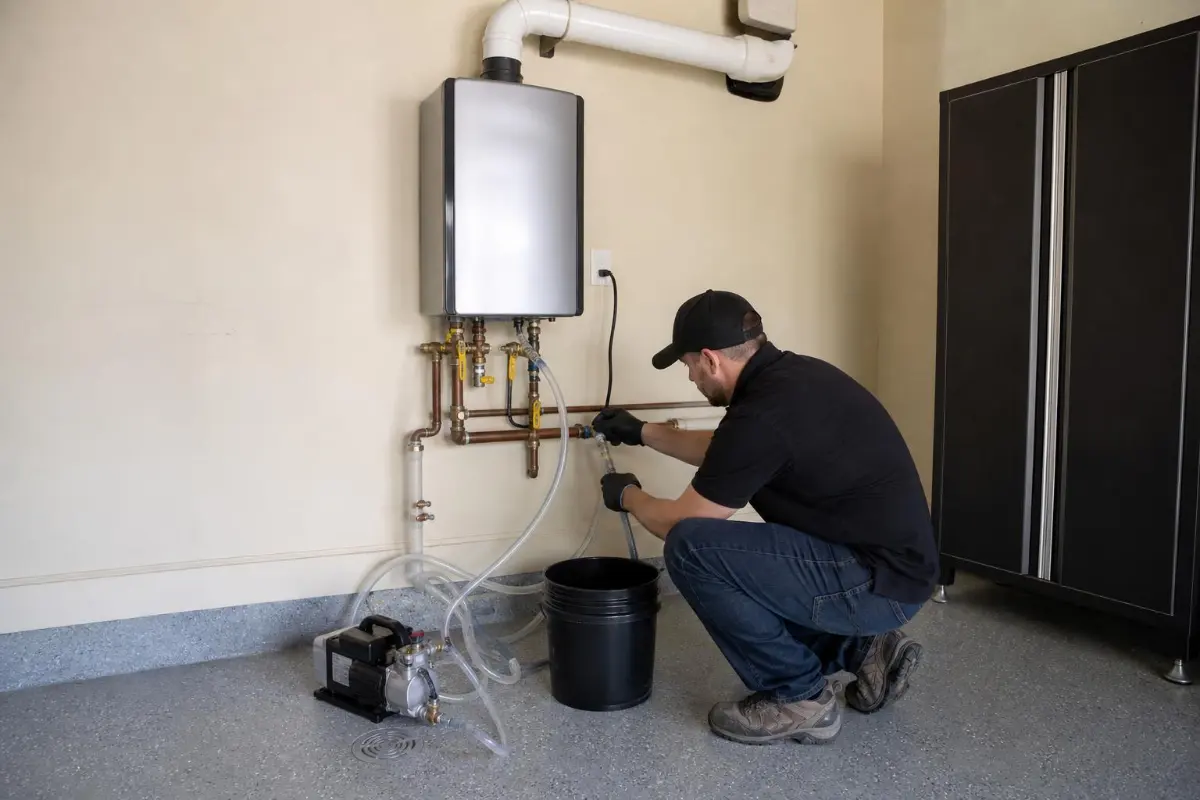
- Popping and rumbling: usually sediment cooking on the bottom of the tank. Draining helps if it isn't too far gone.
- Rotten egg or metallic smell, rusty hot water: often the anode rod, the sacrificial metal rod that protects the tank lining. HomeAdvisor lists an anode rod at $50 to $150. Rusty water from the hot side only, on an older tank, can also mean the tank itself is corroding.
- Lukewarm water from every tap: a broken dip tube, the pipe that carries cold water to the bottom of the tank, lets cold water mix in at the top. HomeAdvisor lists $25 to $175.
Fort Collins Utilities says its water is "naturally soft" (Fort Collins Utilities water quality), so heavy scale is less likely here than in hard-water cities, but sediment still settles. The Department of Energy suggests draining a quart from the tank every three months and checking the anode rod every three to four years (DOE, water heater maintenance).
A Dripping Relief Valve
The temperature and pressure relief valve, or T&P valve, opens if the tank gets too hot or the pressure climbs too high. A valve that drips now and then may be worn, or it may be doing its job because pressure in the tank is rising as the water heats. The DOE suggests testing the valve every six months. HomeAdvisor lists replacement at $20 to $200.
Never cap or plug the discharge pipe. The International Code Council explains that the relief line must end no more than 6 inches above the floor or a drain, with no valve on it and no threads at the end, and must drain by gravity (ICC, water heater safety). Ask the contractor whether thermal expansion is behind the dripping and whether an expansion tank makes sense.
What a Repair Usually Costs
Fort Collins: Angi's Fort Collins water heater repair page shows an average of $569, with most jobs between $212 and $967 and a full range of $100 to $1,500 (read November 2026; the page does not date its data).
National: HomeAdvisor, labeling its data 2025, puts the average repair at $606, with most jobs from $222 to $990, gas repairs at $150 to $500 and electric repairs at $20 to $300. These are guides only. The contractor you are connected with sets the price after seeing your heater.
Repair or Replace?
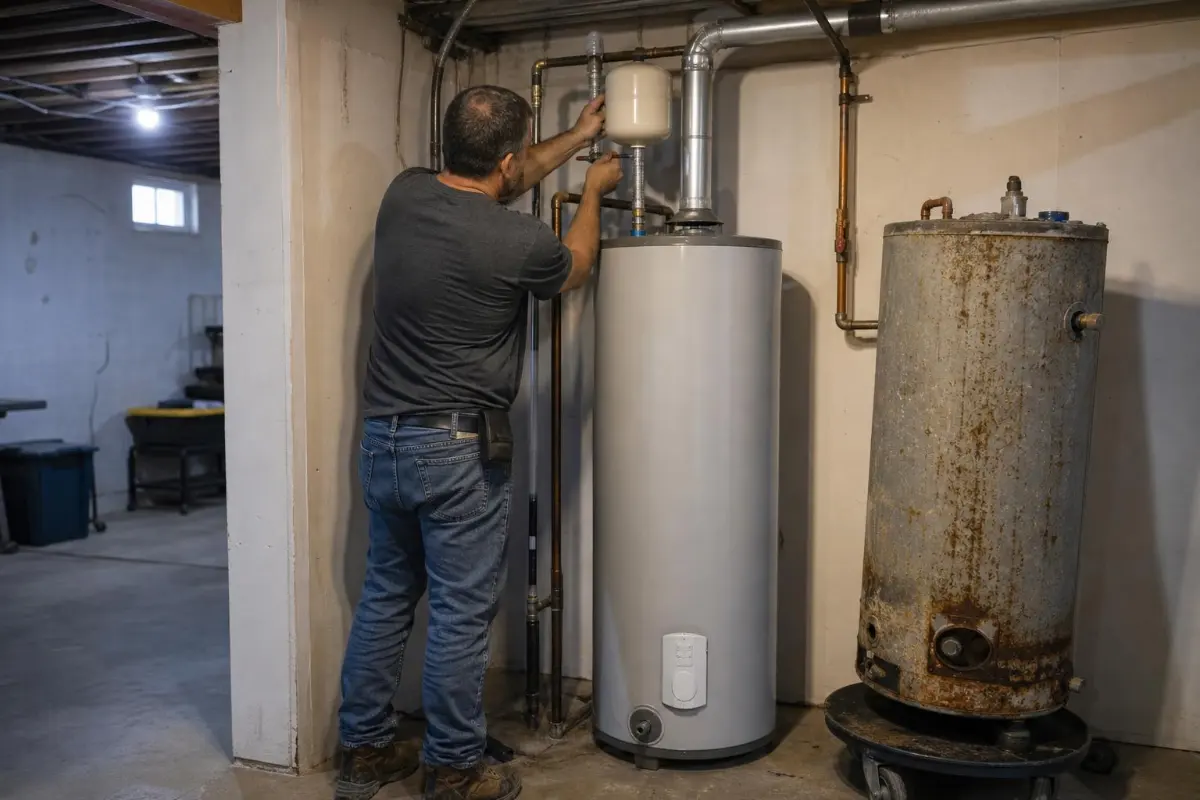
The DOE puts storage tank life at 10 to 15 years (DOE, which water heater is right for you). A new thermocouple on a five-year-old tank is an easy call. A new gas valve on a fourteen-year-old tank that is starting to rust is not. If the tank itself is leaking, it can't be repaired. Replacing the heater in Fort Collins needs a city permit at $65 per water heater (Fort Collins building permits), so ask the contractor to price both paths when it is close.